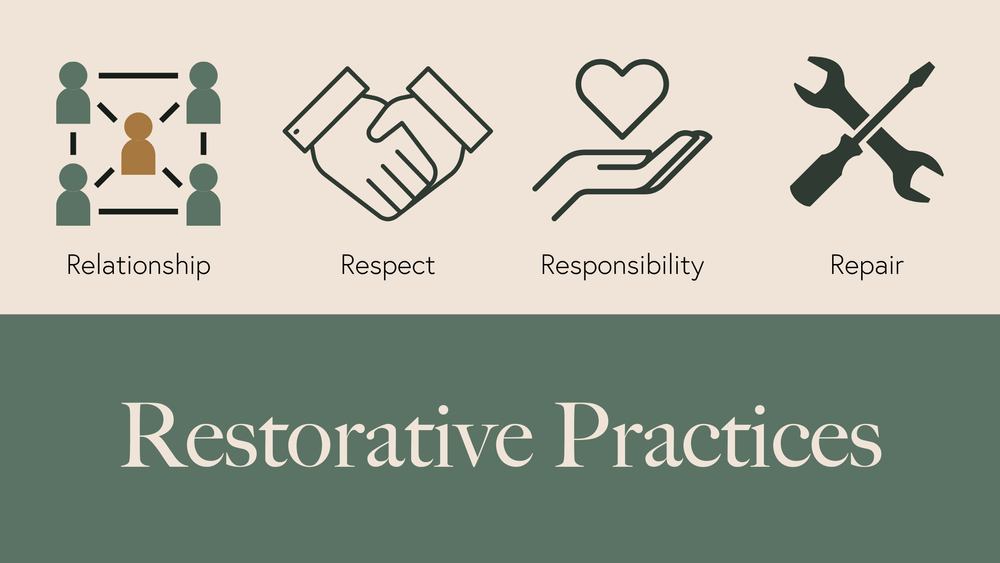
Restorative behaviour policies have gained attention in recent years as an alternative approach to traditional punishment measures in addressing problematic behaviour.
✅ Restorative policies still have rules
✅ They still have high expectations about the classroom being ordered and calm
✅They still have consequences if a student misbehaves
✴️But they create a much more friendly school environment
✴️And they have better outcomes for mental health AS WELL AS grades!
❌Punishment-focussed measures, like we see at St Ivo, make children feel fearful and ashamed so they have to behave
✅Restorative behaviour measures make children feel proud of themselves and their school, so they want to behave
That’s why we want this at St Ivo.
Let us tell you more…
Rather than punishing students for their misbehaviour, restorative behaviour policies seek to address the underlying causes of the behaviour and provide opportunities for students to make amends and learn from their mistakes.
This focus on repairing the harm caused and restoring relationships between individuals involved in the incident has numerous benefits for both individuals and communities involved. In this blog post, we will explore what restorative practices are and why we want them for our children.
What is a restorative school?
According to the Restorative Practices Development Team a restorative school is defined as follows:
- working for respectful relationships among all members of the school community;
- focusing on encouragement and possibility rather than failure and deficit;
- having teachers see themselves as in relation with students and their parents, not as authorities over them;
- having a focus on restoring order by restoring relationships rather than restoring authority when disciplinary offences occur;
- including parents and visitors, who are welcomed as part of the school community; and
- ensuring the environment is one where children and staff can enjoy their school life and have fun.
Improved student-teacher relationships
One of the most significant benefits of restorative behaviour policies is the positive impact it has on student-teacher relationships. Research has shown that when students feel valued and respected by their teachers, they are more likely to engage in positive behaviours and less likely to engage in negative behaviours. By using restorative behaviour policies, teachers can help students feel heard, respected, and valued, leading to better relationships and improved student outcomes.
They found that students who received restorative practices reported feeling more connected to their teachers and classmates than those who received traditional punitive measures. This increased sense of connection and trust can lead to a more positive school culture and improved academic outcomes for students.
Improved academic outcomes
Another significant benefit of restorative behaviour policies is the reduction of suspensions, expulsions, and arrests. Traditional disciplinary measures such as suspensions and expulsions often lead to negative outcomes for students, including a higher likelihood of dropping out and becoming involved in the juvenile justice system.
In contrast, restorative behaviour policies focus on repairing the harm caused by an incident rather than punishing the student. This approach has been shown to lead to a decrease in suspensions and expulsions and an increase in attendence and positive behaviour.
Improved community relationships
Restorative behaviour policies not only improve relationships between individuals involved in an incident but also improve community relationships. When schools use restorative practices, they are promoting a culture of accountability and responsibility, leading to a more positive school community.
Research has shown that schools that implement restorative practices have improved relationships between students, teachers, and families. This improved sense of community reduces incidents between students and can lead to increased parent involvement in schools, improved school attendance rates, and increased academic achievement for students.
Improved mental health and well-being
Finally, restorative behaviour policies can have a positive impact on the mental health and well-being of students. Traditional disciplinary measures such as suspensions and expulsions can lead to feelings of isolation and disconnection from school, leading to negative mental health outcomes for students.
In contrast, restorative behaviour policies focus on repairing harm and restoring relationships, leading to improved mental health outcomes for both teachers and students. Research suggests that, in a restorative system, their is a reduction of interpersonal conflict and incresased engagement. Teachers reported feeling more connected to students, and students felt a greater sense of belonging and more confident in their abilities.
In conclusion, restorative behaviour policies have numerous benefits for individuals and communities. By focusing on repairing harm and restoring relationships, restorative behaviour policies can lead to vastly improved outcomes for students, as well as increased job satisfaction for teachers. As schools continue to search for ways to create safe and positive learning environments we, as parents, urge them to adopt restorative behaviour policies rather than continuing to use traditional punitive measures.
References:
[1] Drewery, Wendy. “Restorative Practices in Schools: Far-Reaching Implications.”
[2] Gregory, A., Clawson, K., Davis, A., & Gerewitz, J. (2016). The promise of restorative practices to transform teacher-student relationships and achieve equity in school discipline. Journal of Educational and Psychological Consultation, 26(4), 342-367.
[4] Fronius, Trevor, et al. “Restorative Justice in US Schools: A Research Review.” WestEd (2016).
 St Ivo Parents Forum